Co-operative Federation of Alternative Art Schools
There are myriad co-operative art schools just waiting to be invented: consumer co-ops controlled by students, workers’ co-ops owned by teachers, and multi-stakeholder co-ops accountable to students, teachers, organisations and entire communities.
Over the past decade, alternative art schools and artist-led initiatives have multiplied in response to rising fees, shrinking provision and precarity in higher education. They provide vital learning spaces, but most rely on unpaid labour and fragile infrastructure.
A co-operative federation could help alternative art schools and artist-led initiatives become more sustainable by providing shared infrastructure, mutual support and collective organisation. The project is currently testing whether a federation could function as a democratic support structure linking alternative art schools, artist-led organisations and support bodies across England.
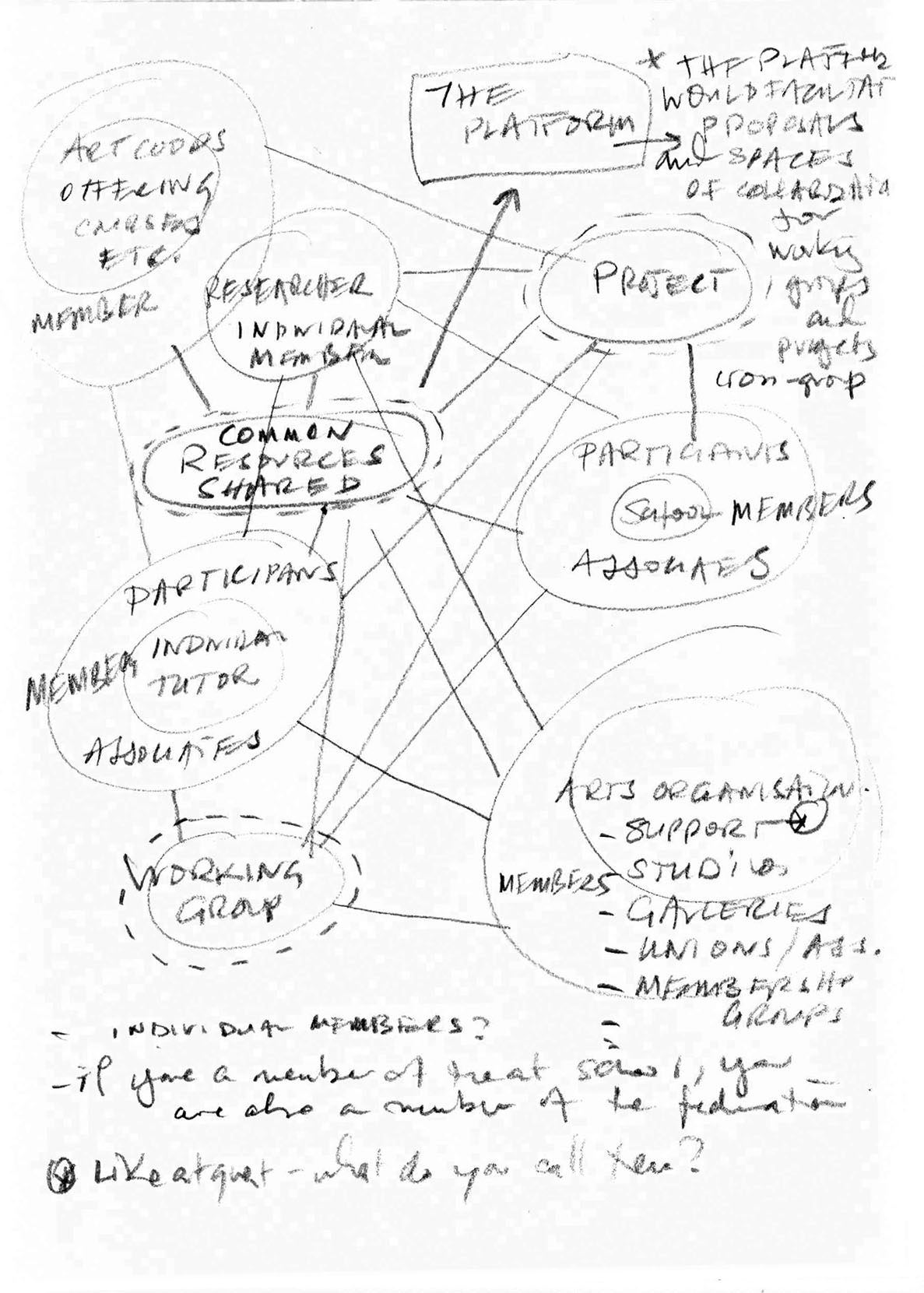
Conceived as a multi-stakeholder co-operative and digital platform, the federation could function as an association and support organisation for the archipelago of alternative art schools and related artist-run organisations and co-ops. This includes art organisations which offer courses, workshops, studio provision, publishing, peer learning and other forms of artist-led education, as well as support organisations whose work intersects with the sector.
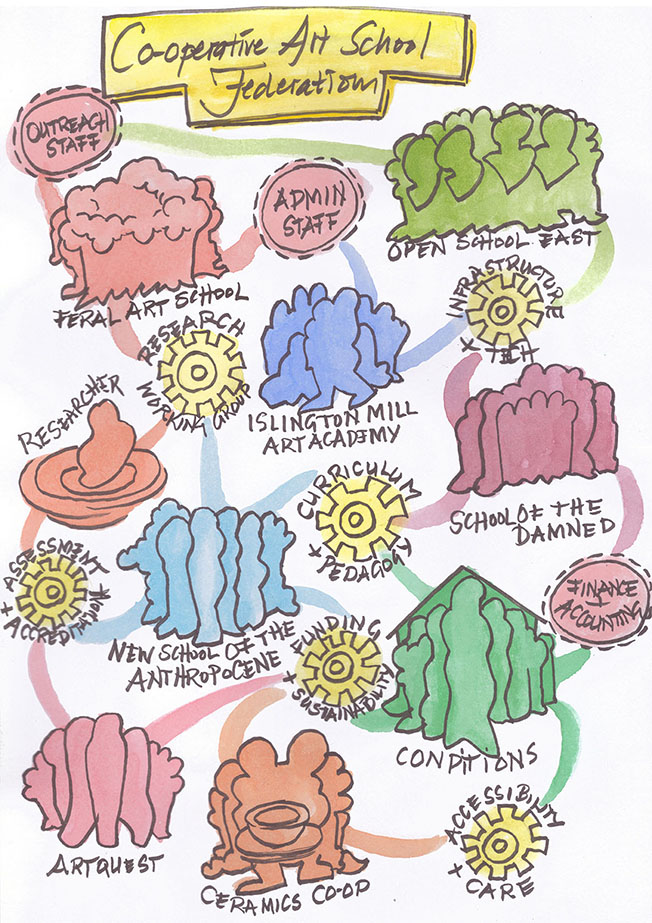
Each school would maintain its autonomy and unique identity, while benefiting from the critical mass of an interconnected movement. The federation could connect the organisations in meaningful ways and facilitate communication, collaboration, and collectivity; art practice, exhibition, and research; pedagogy and learning.
The idea of a co-operative federation of alternative art schools emerged from research into how artist-led and alternative education initiatives might build more durable forms of mutual support without losing their autonomy. Rather than assuming a final model in advance, this phase explores what forms of governance, membership and shared infrastructure would be viable, useful and accountable for a diverse field of organisations.
The present research and development phase uses participatory action research to map the field, gather evidence and test possibilities through interviews, workshops, specialist consultation and a survey. Its intended outputs are a feasibility and evidence report, a draft governance and membership model, an implementation roadmap, and an opt-in communications network linking initiatives nationally.
Bolstered by developments in platform cooperativism, Web 3.0, and net commons, the federation could provide the necessary digital infrastructure to support working groups with representatives from organisations across the federation. It could raise awareness about the alternative art education movement, and support learning and teaching, publishing and research, event organisation, decision-making, administration, finance, and other aspects of running a learning co-op, enabling the management and distribution of common resources.
The federation could achieve most of its aims through a website/platform that would offer member organisations increased visibility through the front end. The back end could provide infrastructure and support with administrative and accounting tools, VLE/LMS, collaboration tools, forums and other resources. After crowd-sourcing ideas for approaches to the design of the platform at Co-op Hackathon 2023, it emerged that such a platform could be assembled by combining existing applications, such as Nextcloud and Moodle.
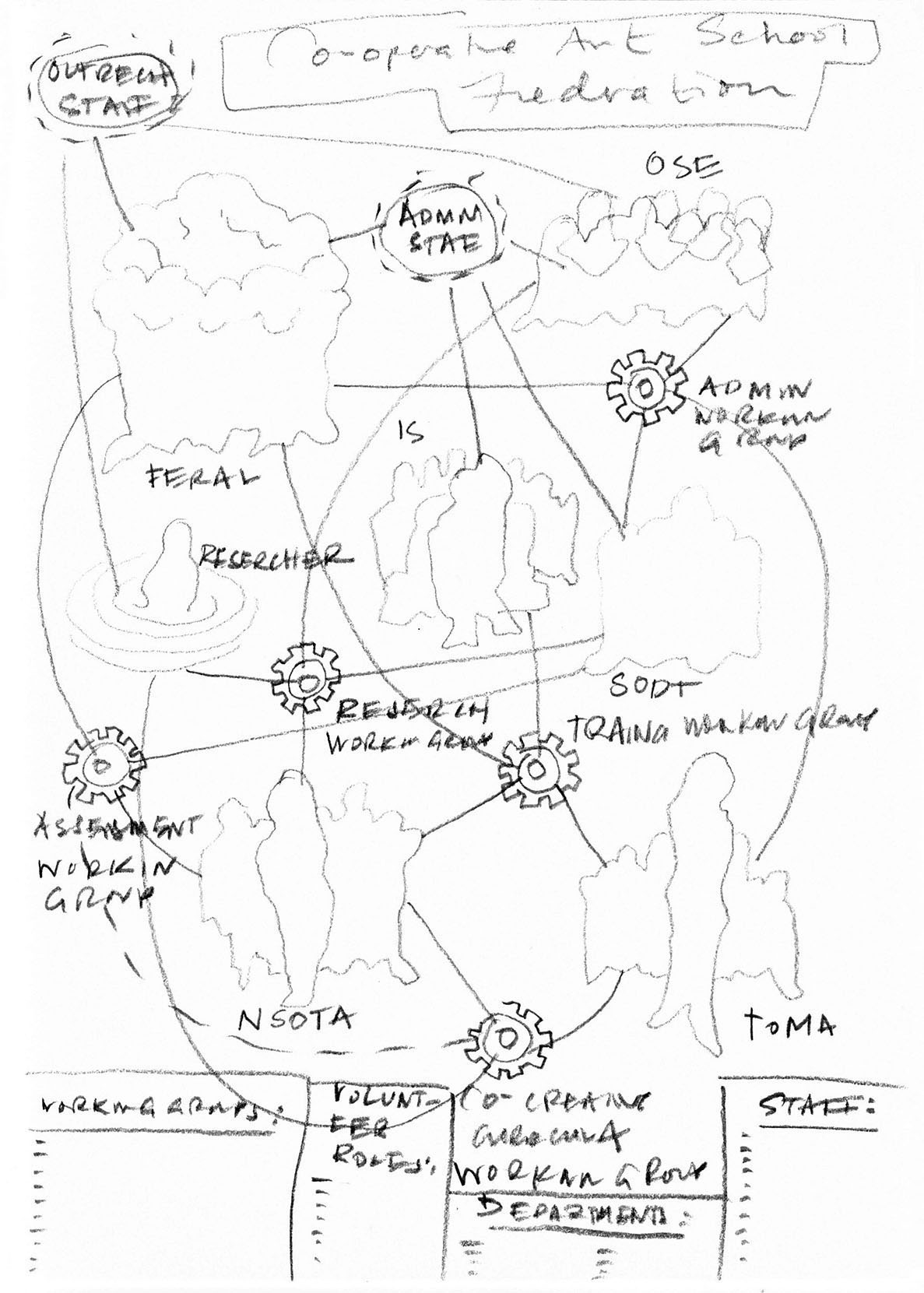
A federation of this kind might be organised through working groups or committees bringing together people from different member organisations. Most prominently, it could facilitate the creation of an alternative accreditation and assessment model. This work could be carried out by working groups on curricula, assessment and accreditation, with the aim to create an accreditation system based on the values of the organisations in the network.
The federation would adopt the diverse pedagogical approaches used by member organisations to create a tiered alternative and consensual value system that could recognise the qualifications that students, associates and participants of the different schools can achieve. Following the example of the RA Schools on the one hand and recent forms of validation, such as DAOs, DisCOs and Metalabel on the other, but also tying these forms of validation to co-created curricula and local, collective decision-making within the federation.
This work sits at the intersection of cultural practice, co-operative governance and digital commons. It asks whether a federation can provide shared tools, collective decision-making and fairer working conditions across a fragmented sector, and what structural, financial and organisational conditions would be required to make that possible.
Founded on the principles of equality, autonomy and co-operation, a formal association of alternative art schools could contribute to more sustainable and democratic forms of art education. More broadly, the project asks whether co-operative structures might help shift the values and working methods that shape art education and the wider art world.
Timeline
This timeline documents the work so far: collective organising, research, publishing and peer-led activity, laying the groundwork for a co-operative art school. Early phases involved building communities and alliances, followed by shared experiments in pedagogy and self-organisation to develop practical models for co-operation.
2015-2019 ART&CRITIQUE Founded a peer-led volunteer-run alternative art education network dedicated to critical engagement with art practice, theory and research, based at The Field New Cross, MayDay Rooms and LARC. Employed collaborative, co-operative and collective models of pedagogy and organisation and fostered alternative models of art education in a series of public events, with the aim of founding a co-operative art school. Organised regular free and open-access events, and collaborated with other alternative art schools to organise festivals.
2017-ongoing Directory of Alternative (Art) Schools & Networks Includes peer support networks, projects and vanguards of the alternative education movement. videomole.tv.
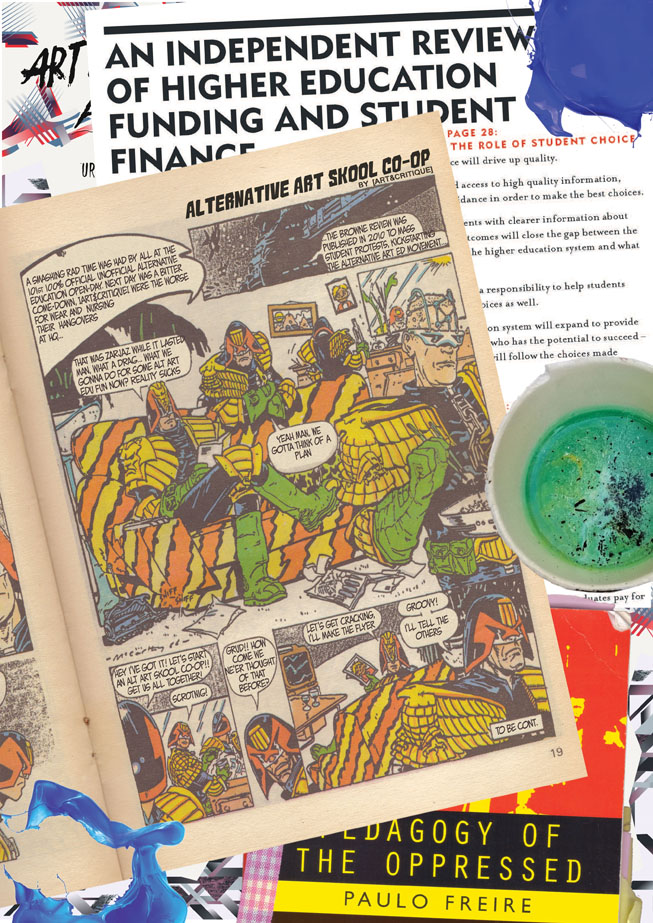
2017 What is alternative art education? First 100% Official Unofficial Alternative Education Open-Day, organised by School of the Damned. SET Space, London (Oct 2017)
2018 What is alternative art education? UK Commons Assembly, Tate Modern, London.
2018–ongoing Art + Critique: Critical & Contextual Studies in Art Practice Independent course in studio practice and critical studies developed as an ongoing framework for collaborative learning, peer support and critical pedagogy, it has also served as a practical site for developing and testing methods of independent art education.
2019-2020 Radical Pedagogy Research & Reading Group public forum and peer-led participatory action-research project on alternative art education, radical pedagogy and self-organisation, with the practical aim of developing a self-organised alternative studio programme.
2019 How To Start Your Own Art School, Alternative Art School Weekender, organised by TOMA. Ugly Duck, London (Mar 2019).
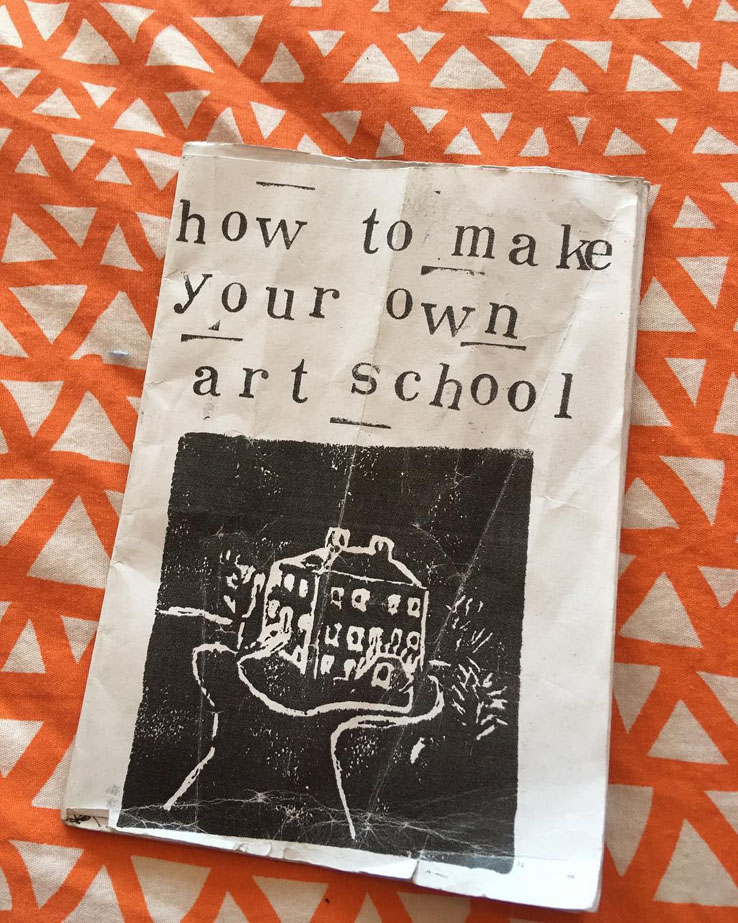
2019 How Too Make Your Own Art School, Sophia Kosmaoglou, ed. videomole.tv, Mar 2019
2019-ongoing Resources for a Co-operative Art School Includes resources on alternative art education.
2019-ongoing Bibliography for a Co-operative Art School Includes sections on alternative art education, art education and pedagogy.
2019-2020 A co-operative art school? Artquest Research Residency at Conway Hall Humanist Library on co-operative education, alternative art education, radical pedagogy and self-organisation, with the aim of raising awareness about cooperative art education and starting a co-operative art school.
2019 Workshops for a co-operative art school at Conway Hall (Nov-Dec 2019). Series of workshops to explore potential models for co-operative art education.
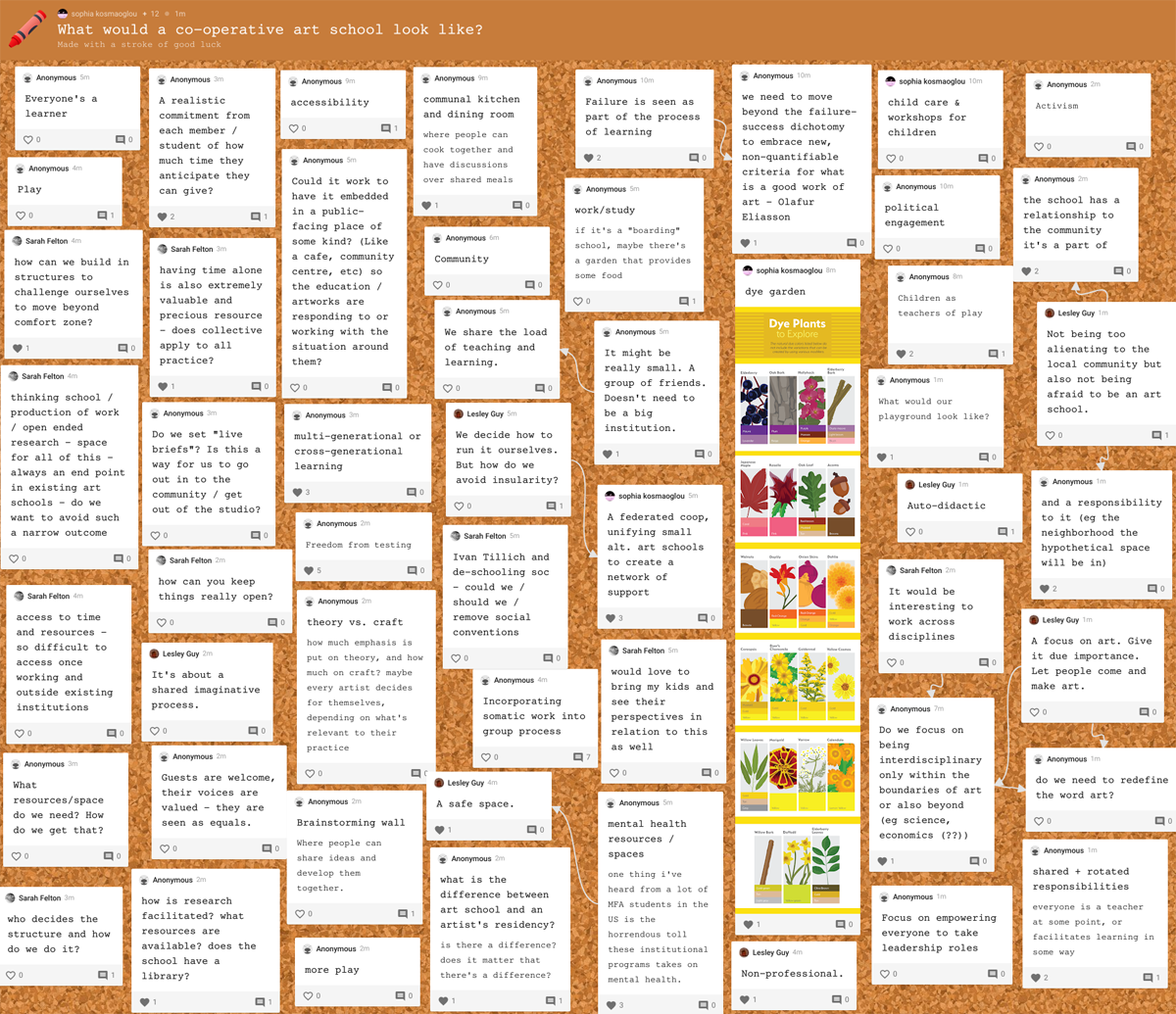
2019 What Would A Co-operative Art School Look Like? Sophia Kosmaoglou, ed. videomole.tv, Nov 2019
2020 Conway Hall Residency 2019: Interview with Sophia Kosmaoglou by Nick Kaplony. Artquest, London (Oct 2019).
2020 Research Residency at Conway Hall Library (Editorial). Ethical Record, London (Apr 2020), pp. 3-4.
2020 Festival of Alternative Art Education and exhibition The Secret is Out: at Conway Hall with support from Artquest and Conway Hall. Postponed three times and eventually cancelled due to limited resources.
2020 Emergency Response Fund, Arts Council England. Supported the development of an online version of Art + Critique and helped sustain the project through the pandemic, including the shift from the postponed Festival of Alternative Art Education to the online Alternative Art Education (Slow) Marathon.
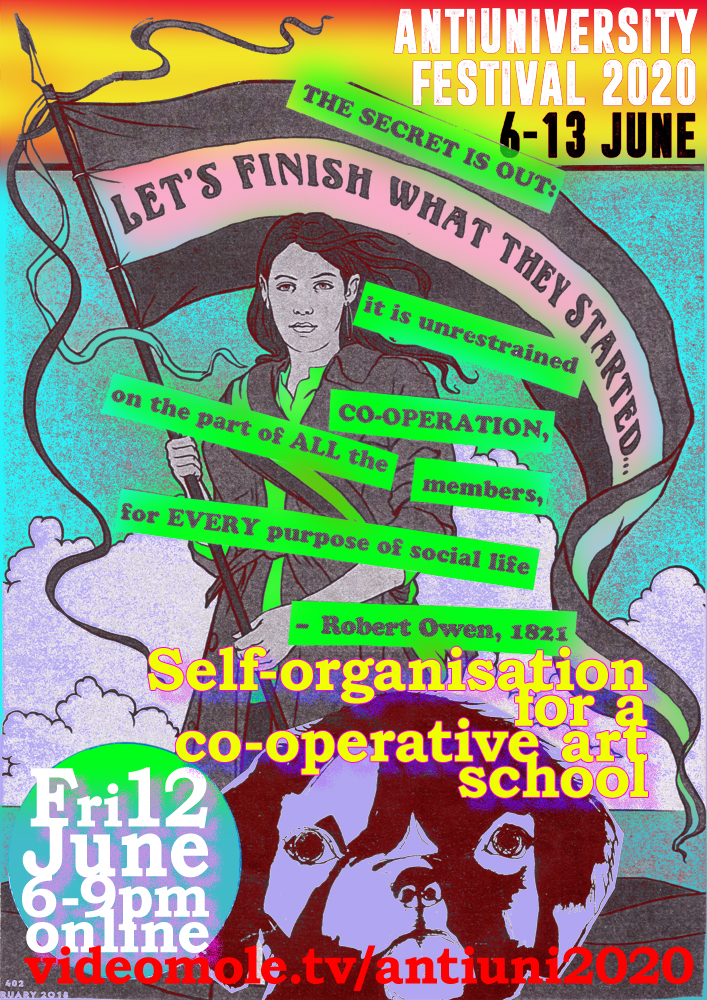
2020 Self-organisation for a co-operative art school, Antinuniversity Now! London (Jun 2020).
2020 Interview with Feral Art School. URgh! #1: Alternative Art Education. videomole.tv (Jul 2020).
2020 URgh! #1: Alternative Art Education. videomole.tv (Jul 2020).
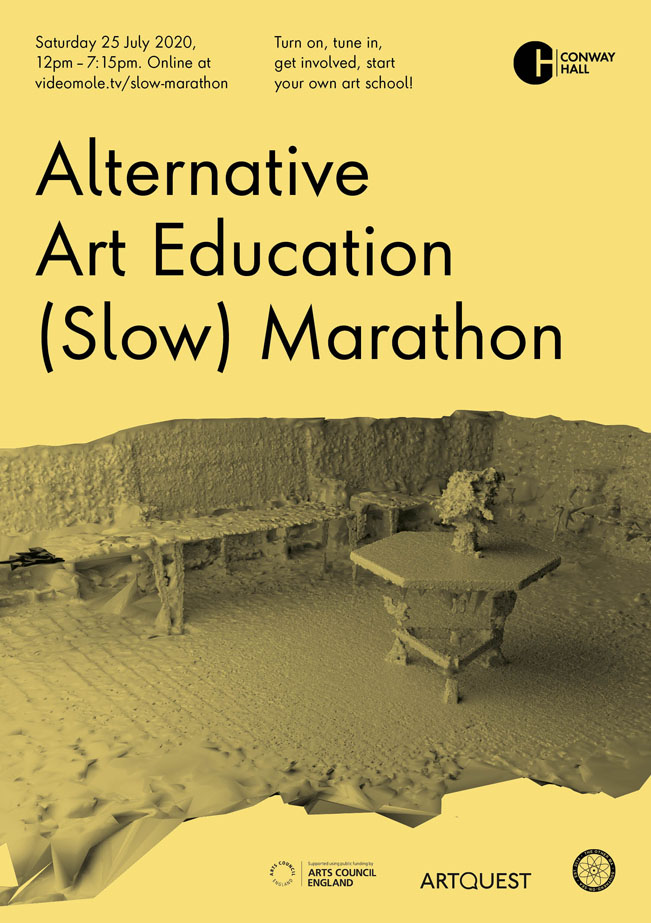
2020 Alternative Art Education (Slow) Marathon Online festival collaboratively hosted with Conway Hall, Artquest, TOMA, Arts Council England (Jul 2020).
2022 Participation in Spanner in the works? Co-operation then, now & into the future, organised by Co-operative College at Imperial College, as part of ongoing research on co-operatives and co-operation.
2023 Contribution to TOMA Dreamings: A report by Jack Ky Tan on the ‘TOMA Way’. The Other MA, Southend-on-Sea.
2023 A co-operative art school is pie in the sky. Towards New Schools. Gerrit Rietveld Academie, Amsterdam (Dec 2023).
2023 Peer review for Co-operative Education, Politics, and Art: Creative, Critical, and Community Resistance to Corporate Higher Education, R. Hudson-Miles and J. Goodman eds. Abingdon: Routledge, 2024.
2023 Co-op Hackathon 2023, Co-ops UK, The Foundry, London.
2023-ongoing Co-operative Art School Project To develop a proposal for a nomadic art school constituted as a workers’ co-op, in partnership with Larisa Blazic.
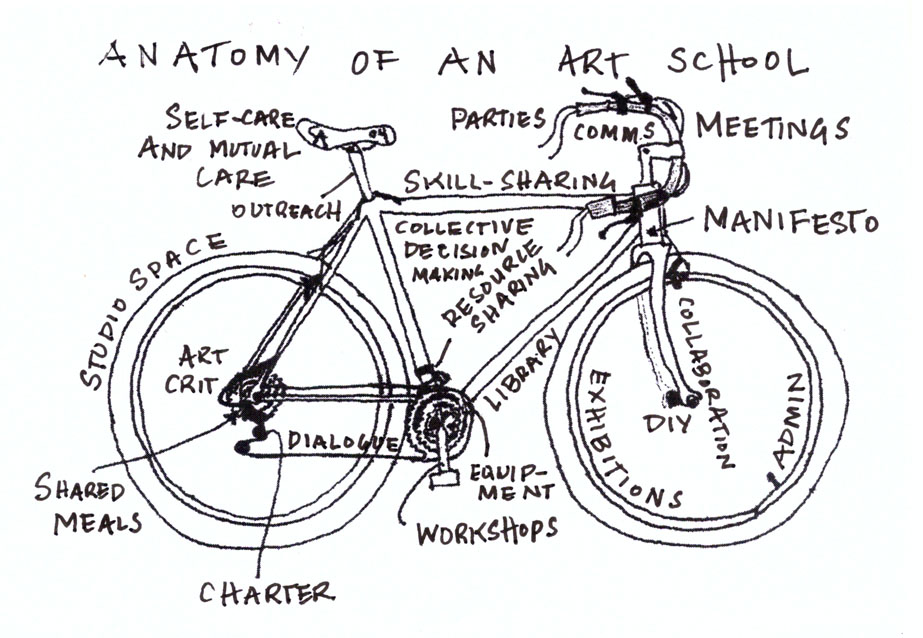
2024 Anatomy of an Art School, Flowcharts for Deschooling. Sluice: Unlearning (Autumn 2024).
2026 Specialist advisor for Co-operative Incubator: A social enterprise for ethical fashion innovation. Lead researcher Larisa Blazic. University of the Arts London.
2026 How to throw your own party: Peer mentoring as infrastructure. Artquest, London (Feb 2026).
Next phase
The project came to an abrupt halt in March 2020 and further delayed by the isolation and burn-out of Covid. However, I had time to acknowledge my frustration with the lack of continuity in the community-oriented, collective and collaborative approach because I did not have the means to pay the participants. This led to a shift in my approach. I am currently planning the next phase of this project, which involves three long-term stages in a process that will take a minimum of 2-4 years:
- Arts Council R&D Grant application to pay for consultations with stakeholders, co-operative support organisations and web-developers/system engineers, in order to understand the needs of the stakeholders and correlate these with the legal/constitutional/business aspects of co-operative models and the possibilities of the platform. The aim is to put together a proposal for the legal constitution of the federation and a proposal for the platform. This stage will include interviews with stakeholders, further surveys and focus groups, workshops, publications and events. To collect information about their needs and their ideas about how they would like to co-op/federation to work. It will also include interviews and consultations with co-operative support organisations and web-developers/system engineers. Larisa Blazic will assist with the design process as a consultant.
- National Lottery Project Grant application to carry out the work detailed in the proposals created in stage 1, in collaboration with stakeholders, co-operative support organisations and web-developers/system engineers.
- Crowd funder to complete the work detailed in stages 1 and 2 and open membership registration.
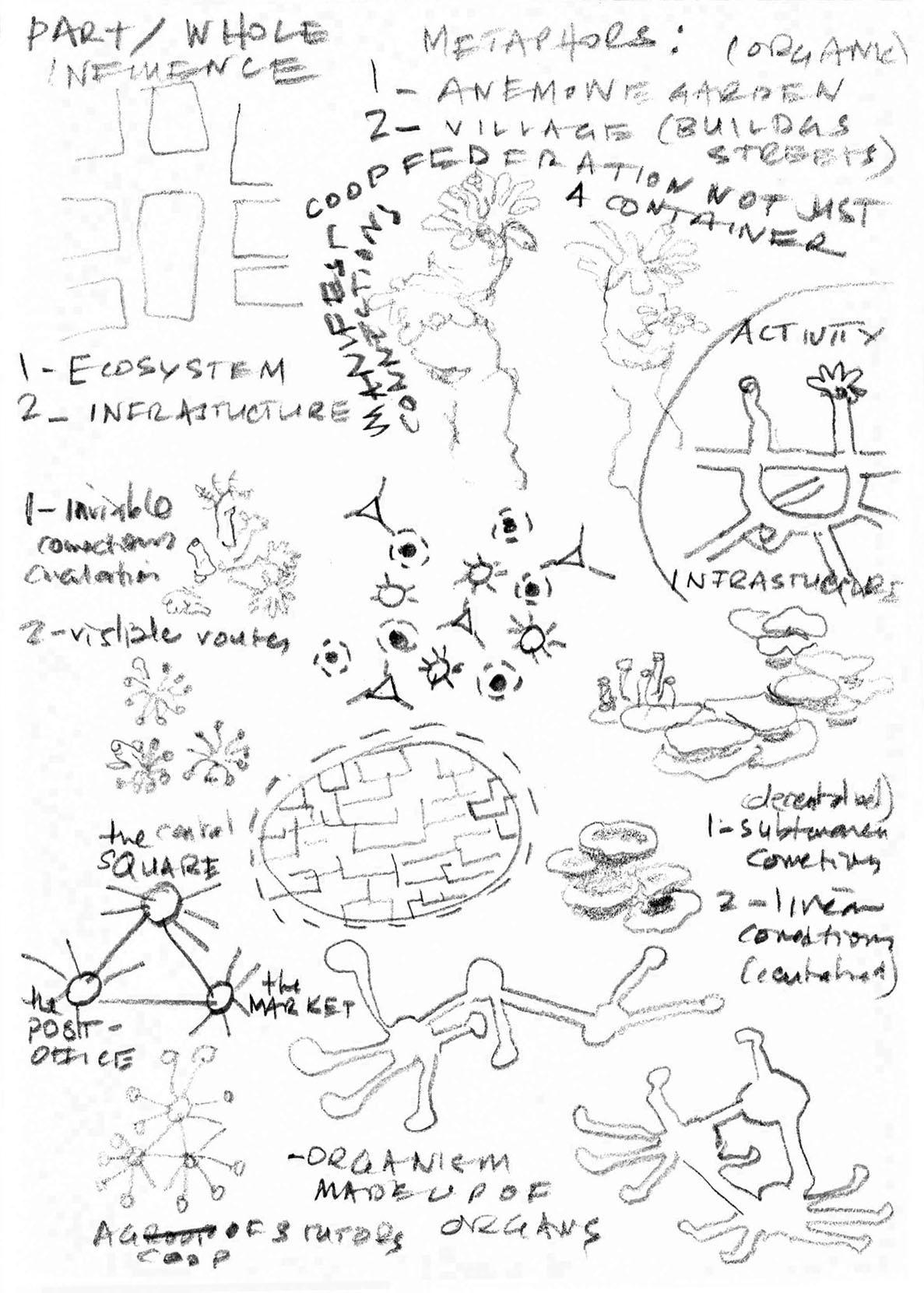
Visualising the project
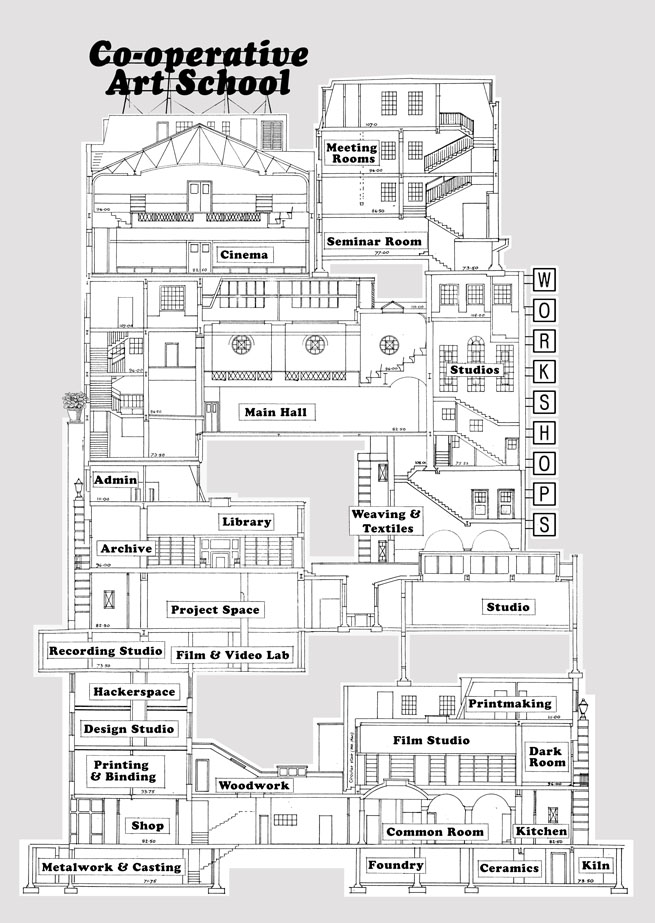
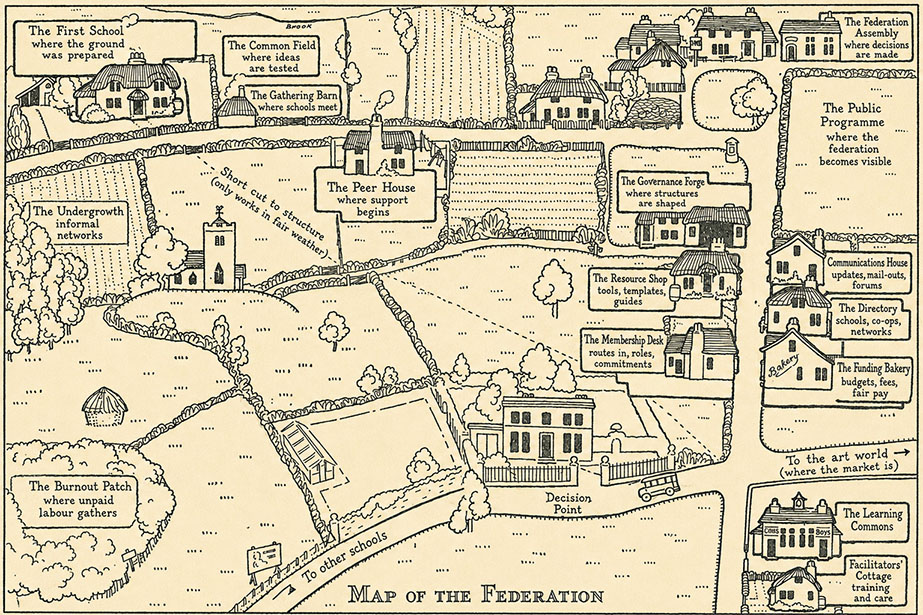
This is a complex project that is difficult to communicate. In the past I have made various attempts to communicate the project using mechanical, architectural and town planning metaphors. I am currently shifting to more organic ways of representing the project as an ecosystem.